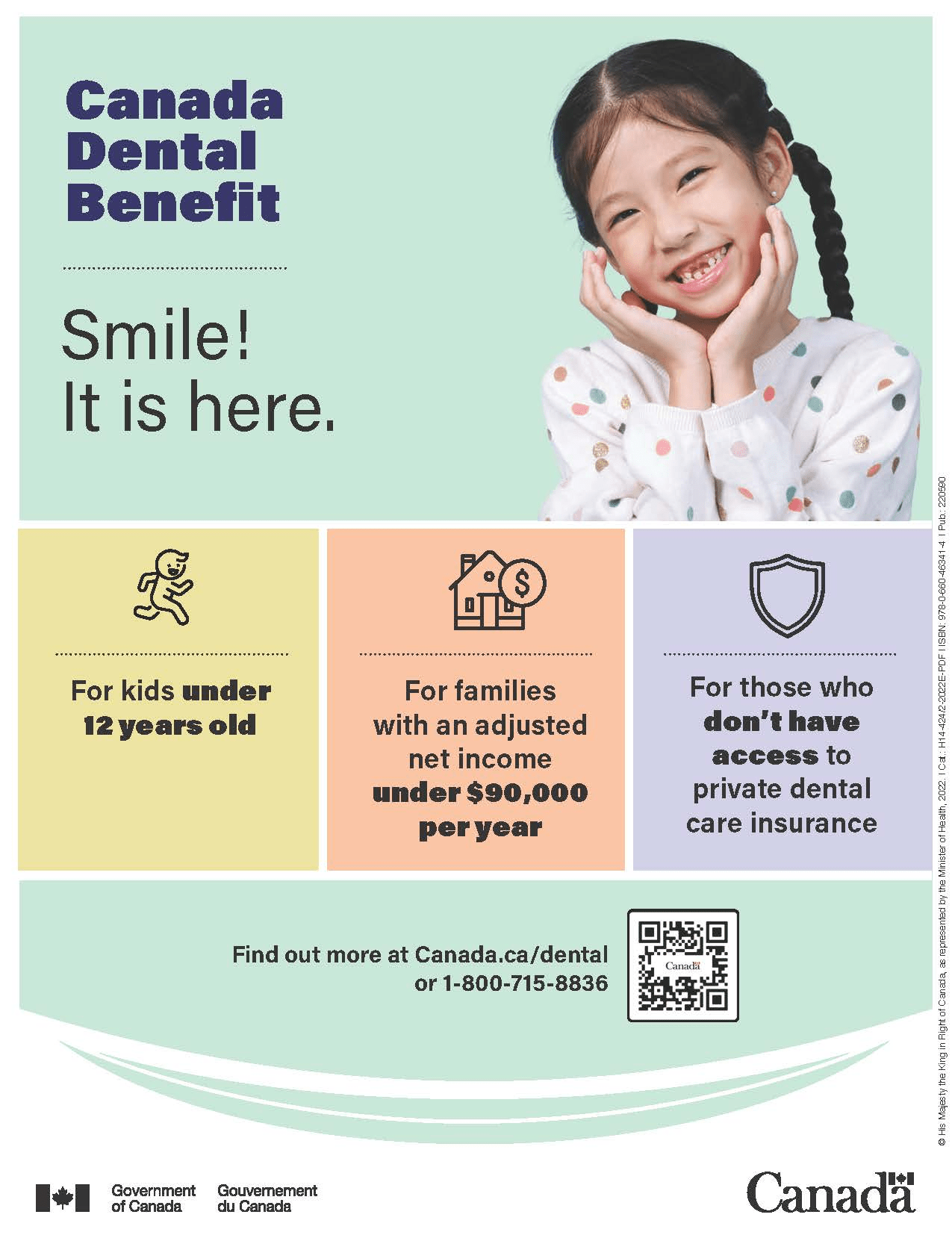
We’re diving into an essential topic for Canadian families – the Canada Dental Benefit. This interim benefit, introduced by the Canadian government, is a significant stride towards reducing dental care costs for families. Tailored for those earning less than $90,000 annually, it’s designed to support parents and guardians who bear the cost of dental care for children under 12 who lack private dental insurance. This benefit comes as a relief for many, highlighting the government’s commitment to accessible healthcare.
We’re here to break down the essentials of the Canada Dental Benefit – from eligibility criteria to application procedures. Whether you’re a parent, guardian, employer or employee, this guide is your starting point to navigate the Canada Dental Benefit with ease and confidence.
Understanding who is eligible for the Canada Dental Benefit is the first step to accessing its advantages. There are two distinct benefit periods, each with its specific criteria, depending on when your child receives dental care.
The first period spanned from October 1, 2022, to June 30, 2023.
The second extends from July 1, 2023, to June 30, 2024.
To qualify for the Canada Dental Benefit, you must have met several conditions. Keep in mind, eligibility is based on the 2022 tax return. These factors include:
Use the eligibility checklist by the CRA to ensure that each child applied is qualified.
Eligibility extends to a range of dental care services, including orthodontic, preventative, restorative, and diagnostic services, among others. However, it’s important to remember that oral health services provided for free do not qualify for this benefit.
The amount you can receive from the Canada Dental Benefit varies based on your family’s income, ensuring those who need it most get the most support. Here’s how it breaks down:
| Adjusted family net income | Full custody amount | Shared custody amount |
| Less than $70,000 | $650 | $325 |
| $70,000 to $79,999 | $390 | $195 |
| $80,000 to $89,999 | $260 | $130 |
| $90,000 or more | not eligible | not eligible |
The CRA uses your 2021 income information for dental care received from October 1, 2022, to June 30, 2023, and your 2022 income information for care received from July 1, 2023, to June 30, 2024. You can apply for a maximum of two payments per eligible child, depending on your situation and the benefit period.
For more information on how much you can expect to receive, view details from the CRA.
Before applying for the Canada Dental Benefit, there are several preparatory steps to ensure a smooth process:
Applying for the Canada Dental Benefit is straightforward, especially if you’re prepared. Here’s what you need to do:
Sometimes, circumstances change, and you might need to return the Canada Dental Benefit payment. Here’s when and how to do it:
This new mandate requires employers to indicate whether an employee, former employee, or a spouse of a deceased employee had eligibility as of December 31 of the reporting tax year, to access any form of dental insurance or coverage due to current or former employment.
The scope of this reporting includes ongoing dental care coverage, reimbursement, or insurance as an employee or retiree benefit. However, it’s important to note that the reporting does not cover whether an individual utilized or accepted the coverage, but rather if it was available to them.
The requirement to report this information extends not just to traditional employers but also includes Pension Plan Administrators and other organizations responsible for completing annual T4As and T4s. This reporting requirement is mandatory starting from the 2023 tax year and will be an annual obligation.
For the 2023 tax year, the following new boxes along with specific codes will be added to T4 and T4A slips to facilitate this reporting:
The codes for these boxes are as follows:
These new additions to the T4 and T4A slips represent a significant step in ensuring transparency and proper administration of the Canada Dental Benefit. For employers, it underscores the importance of accurate reporting of benefits offered to employees. For employees and other beneficiaries, this move ensures that their eligibility for the Canada Dental Benefit is clearly established, thereby facilitating smoother access to dental care services.
PayEvo is always up-to-date on the latest updates and tax-changes. Don’t worry about the new boxes this upcoming tax-season, our in-app generation and submission tools make it a breeze for you to take care of your T4, T4As, & Rl-1.
We want to make this process as smooth as possible for PayEvo payroll users. Check out our help article to see how we’re managing the new changes on our platform.
In the evolving Canadian labor market of 2026, the distinction between a contractor vs employee…
There was a moment, somewhere between 2012 and 2015, when Canadian employers quietly lost control…
What started as a viral TikTok trend has arrived at the legislature. Here is what…
March 3rd has a specific feeling You know the one. It's not quite relief. It's not quite exhaustion. It's that particular fog that settles in…
If you run a Canadian business with 10–50 employees, payroll probably feels routine. You approve…
Cyberattacks aren’t just targeting massive tech companies anymore. They’re targeting small and mid-sized businesses, and…