You know that sinking feeling when you open your email and see “Notice of Assessment” from the CRA? Yeah… it’s never because they want to send you a thank-you card.
Canadian payroll penalties are like those sneaky “service fees” on concert tickets, you think you’re paying one price, and suddenly your budget is crying in the corner. They don’t always smack you with one giant bill, either. Nope. They sneak in through small, repeat hits until one day you realize you’ve basically been funding the CRA’s coffee fund for years.
The good news? These penalties are almost entirely avoidable if you know what’s causing them and how to sidestep them without making payroll your full-time stress hobby.
The CRA’s penalty regime isn’t a bedtime story meant to soothe you, it’s more like the fine-print on a credit card that bites when you least expect it. The key thing to remember is: penalties grow quickly and they’re applied to the amounts you failed to remit or report.
The CRA uses a graduated approach to late remittances (short delays start small, repeated or longer delays escalate sharply). For remittances, typical graduated penalties observed in guidance and payroll resources are 3% for very short delays, 5–7% for slightly longer delays, and 10% (or higher) for more substantial or repeated failures, plus interest on top of those amounts. The CRA also has stiff penalties for failure to report income (for example, penalties tied to unreported amounts on T4s) and for repeated failures that can push totals much higher.
Put bluntly: a single missed remittance or a misreported T4 can cascade into a 3–10% penalty on the unpaid amount, plus interest and administrative hassle. For a small employer, that adds up fast, and it’s cash that leaves your business, without buying you anything useful in return
Canadian payroll penalties aren’t like a flat tire you can fix right away. They’re more like a slow leak.
Let’s say you get hit with a $250 penalty once a quarter. That’s $1,000 a year gone, enough to cover new software, staff training, or a well-deserved team lunch.
Here’s where the “death by a thousand cuts” idea becomes painfully real. There’s two ways to think about it:
So the effect is twofold: direct penalties that are an obvious cash leak, and indirect costs (time, reputation, increased audit risk) that compound the damage. Both push money away from investment in the business and toward compliance clean-up.
These are the practical things that actually cause the CRA to ring your doorbell (or, more likely, email you angrily):
Those triggers don’t require malicious intent, usually they’re just the result of running a small business and wearing 17 hats at once.
Avoiding Canadian payroll penalties isn’t rocket science. It’s mostly about giving yourself less room for human error. Here’s a practical checklist you can implement without turning payroll into a full-time job:
This is one of those “pay a little now, save a lot later” situations.
ADP – A good system, but it’s built for large enterprises. SMBs often find themselves paying for features they don’t need, waiting days for support, and stuck in complex menus. PayEvo is built specifically for Canadian small-to-midsize businesses, no excessive pricing, no “minimum headcount” clauses.
Humi – Great for HR-first features, but payroll is a side gig for them. With PayEvo, payroll is our core, CRA compliance and remittance automation are in our DNA, not just an add-on.
Wagepoint – Friendly interface, but limited integrations and fewer advanced automation features. PayEvo integrates payroll, benefits, and payments into one smooth system, so you’re not juggling platforms.
With PayEvo, you get Canadian-first compliance, CRA deadline automation, no hidden fees, and real humans ready to help you. The result? Penalty-free payroll without the stress migraines.
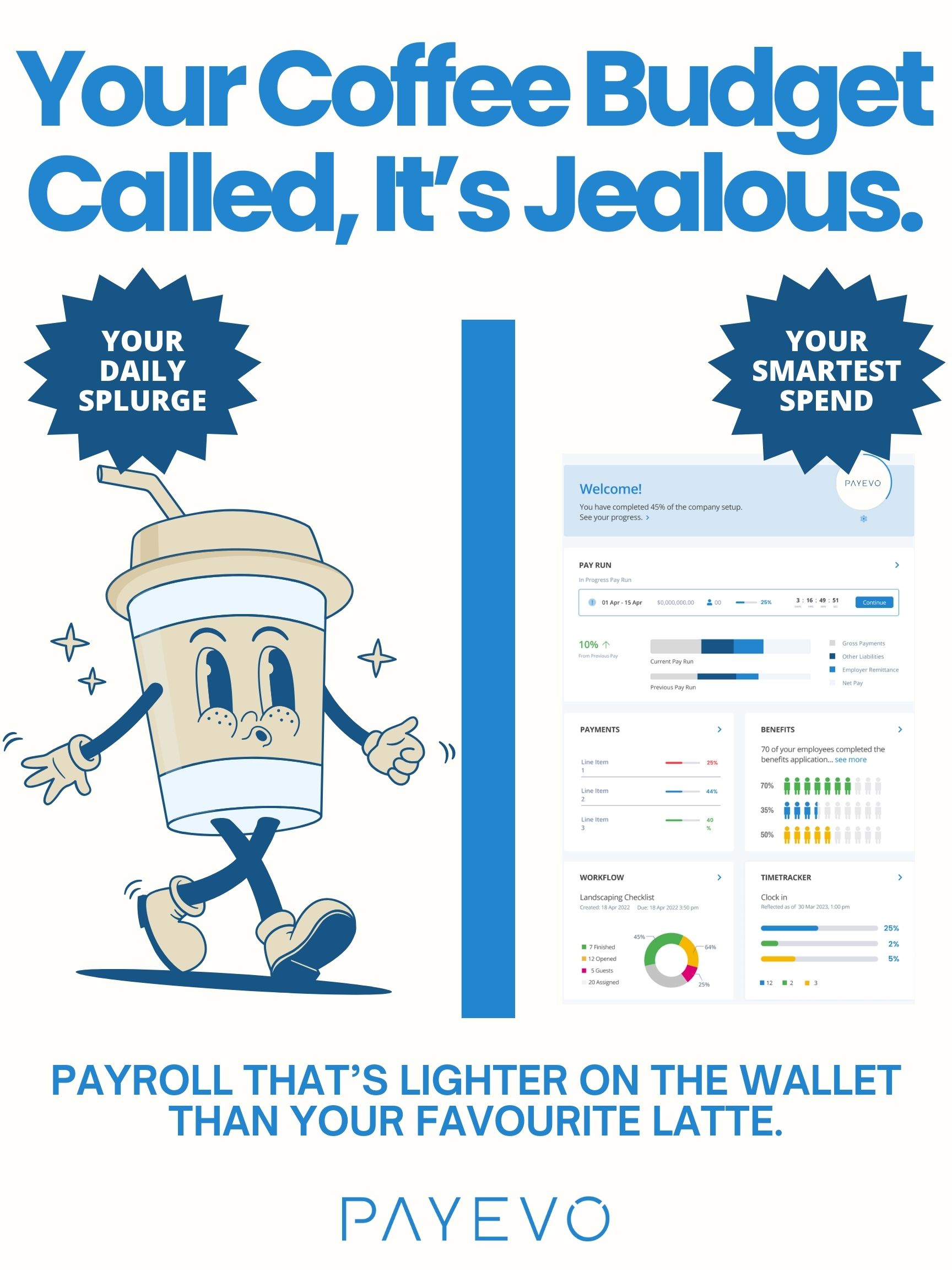
Here’s the thing about payroll penalties, they’re like buying the world’s most expensive, worst-tasting coffee. One late remittance on a $7,000 payroll could cost you 5% , that’s $350, which is the caffeine equivalent of a few hundred lattes. And unlike coffee, CRA penalties don’t make you feel warm or productive.
PayEvo’s highest-tier plan runs at just $2 per employee per pay period, with a $75 monthly minimum. For most small businesses, that’s less than the cost of a cup of coffee per employee for the entire month and you get:
Avoid just one or two mistakes a year and the software has already paid for itself, everything after that is pure savings (and stress reduction).
In other words, PayEvo turns payroll from a penalty magnet into a penalty-proof process, and all for less than what you spend on a couple of cappuccinos.
Canadian payroll penalties aren’t just annoying , they’re an expensive habit you didn’t sign up for. One late payment here, one miscalculation there, and suddenly you’ve spent the equivalent of a month’s coffee budget funding the CRA’s coffee runs.
But here’s the thing: you don’t have to keep playing that game. With the right payroll software, one built for Canadian businesses, with CRA compliance built right in , you can stop worrying about due dates, tax rates, and whether you hit “send” on your remittance.
PayEvo was made to do exactly that. For less than the cost of two lattes a month per employee, you can buy peace of mind, protect your budget, and keep every dollar where it belongs: growing your business, not padding a penalty statement.
If you’ve been waiting for a sign to fix your payroll process before the next penalty lands in your inbox, this is it.
Signup today, and make payroll mistakes a thing of the past.
In the evolving Canadian labor market of 2026, the distinction between a contractor vs employee…
There was a moment, somewhere between 2012 and 2015, when Canadian employers quietly lost control…
What started as a viral TikTok trend has arrived at the legislature. Here is what…
March 3rd has a specific feeling You know the one. It's not quite relief. It's not quite exhaustion. It's that particular fog that settles in…
If you run a Canadian business with 10–50 employees, payroll probably feels routine. You approve…
Cyberattacks aren’t just targeting massive tech companies anymore. They’re targeting small and mid-sized businesses, and…